
An Interview with Kentaro Suga-san on Smart Buildings, Sustainability, and the Future of Construction
View the entire interview clip
In a recent Voice of Customer & Partner series programme, we had the privilege of speaking with Kentaro Suga-san, a seasoned expert in sustainable building design and smart technology integration. With years of experience at Arup Japan, Suga-san shared valuable insights on the challenges and opportunities in Japan’s smart building market, the role of IoT and AI, and how innovative approaches can drive sustainability.
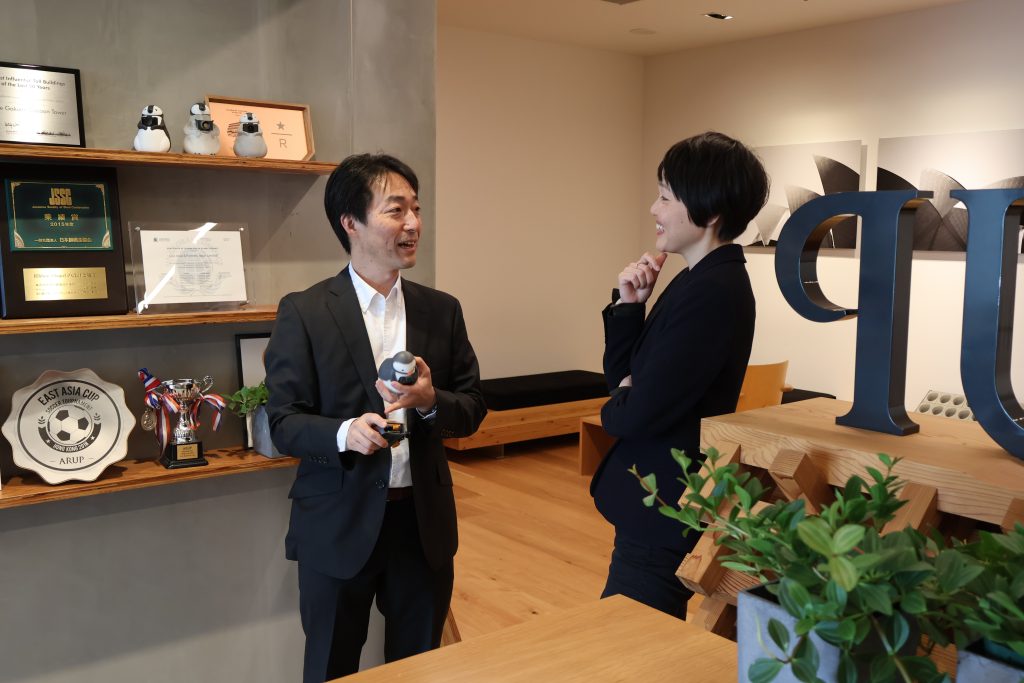
Suga-san showed Serena a sensor integrated into a cute penguin doll sculpture at Arup Japan Office
The Biggest Hurdle in Sustainable Buildings? — Operations
When asked about the biggest challenge in making buildings more sustainable, Suga-san didn’t hesitate: “It’s operation, definitely operation.” He explained that while green building certifications and sustainable designs are crucial, the real test lies in how buildings are used. Without proper feedback loops from actual usage, it’s difficult to refine designs for better efficiency.
“The key lies in how people use the building and how to get feedback from actual usage to reflect it into planning, design, and operation — creating a virtuous circle.” One major issue is the lack of verifiable data. Clients often demand proven case studies before adopting green building methodologies, but without sufficient operational data, designers struggle to provide concrete evidence.
Technology’s Role: From Manual Counting to IoT Sensors
Suga-san highlighted how technology is transforming operations, recalling a time when project managers manually counted meeting room usage to optimize office layouts. Today, IoT sensors can gather the same data effortlessly. “Technology like IoT digital technology resolves it very easily. You can just put sensors in place and analyze the data directly.” However, he emphasized that data is just the starting point. The real value comes from interpreting insights and adapting designs accordingly.
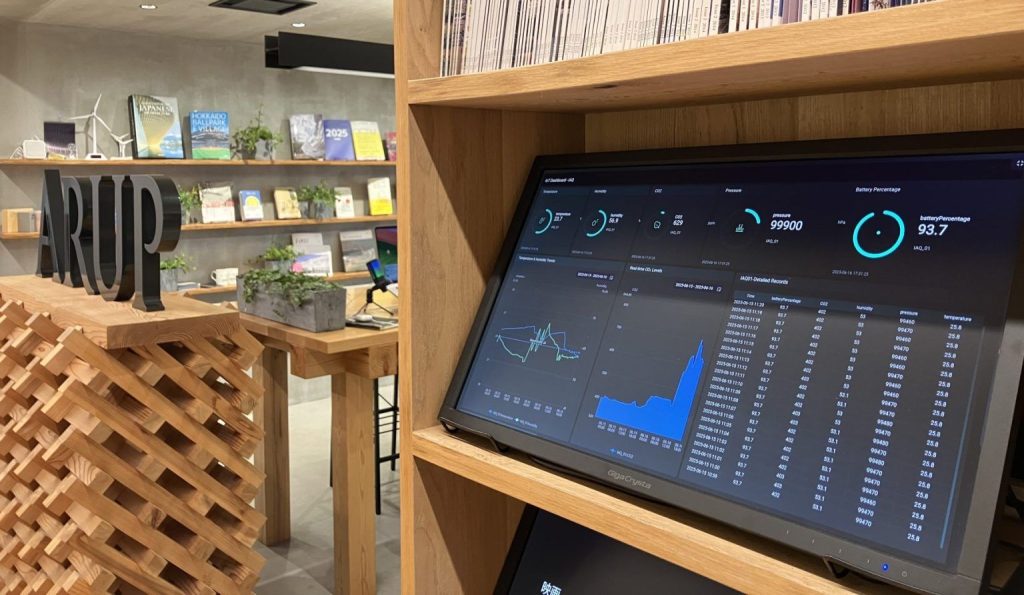
Neuron is integrated into Arup Japan’s daily office operations
The Japanese Market: Slow Adoption but High Potential
Japan’s construction industry has been slow to embrace digital transformation, even though adopting a unified system has been proven to improve construction site safety and reduce induction time (according to research published in Science Direct). Suga-san pointed out two key barriers:
- A Gap Between Construction and IT – Traditional construction firms struggle to integrate IoT solutions, while tech companies find it hard to penetrate the industry’s rigid structure.
- Legacy Systems – Many buildings still rely on outdated BMS (Building Management Systems), making data accessibility a challenge.
He pointed out: “Neuron or other services can bridge the gap between the physical construction industry and IT tech-oriented digital world.” Yet, he remains optimistic: “The market is still trying to figure it out, but new players could resolve these issues much faster and cheaper.”
A Lesson from an Unforgettable Project: The Zero-Electricity Columbarium
One of Suga-san’s most memorable projects was designing a columbarium (a resting place for ashes) that required no electricity, despite needing cooling and lighting for annual summer gatherings. “The architect asked if we could design a building without using electricity at all. That changed the way we approached the project.” Through innovative passive cooling and natural lighting solutions, the team created a comfortable space that has stood for over a decade, proving that sustainability doesn’t always require high-tech solutions, but rather creative thinking!
The Future: Smart Buildings as a Solution to Japan’s Workforce Crisis
With Japan facing a severe labor shortage in construction and facility management, Suga-san sees smart building technology as a game-changer: “If we can install real digital technology in buildings, we can open up the industry to more players and new ways of working.”
Let the Data Tell the Story
Suga-san’s key takeaway? “Let the data tell the story.” Smart buildings aren’t just about installing sensors, they’re about learning from real-world usage and continuously improving sustainability. As Japan’s market gradually embraces digital transformation, companies like Neuron (which started with the Beijing Water Cube project) are well-positioned to bridge the gap between construction and smart technology.
About Kentaro Suga
Kentaro Suga is a sustainability and building technology specialist with extensive experience in smart building design, digital transformation, and sustainable construction practices in Japan. Based in Tokyo, he has worked with multidisciplinary engineering teams to integrate data-driven solutions into building operations, helping organisations improve energy performance, operational efficiency, and long-term sustainability outcomes. He is also a visiting associate professor at Kyoto Institute of Crafts and Textiles.
At Arup Japan, Kentaro has been involved in projects spanning commercial buildings, infrastructure, and innovative low-energy developments. His work focuses on bridging the gap between traditional construction practices and modern digital technologies such as IoT sensors, building analytics, and smart facility management systems.
Refereces
- Zero Carbon Park, Hong Kong — Digital Twin and Building Analytics Implementation: A pioneering zero-carbon facility demonstrating how centralized dashboards and digital twin technology support sustainable building operations and real-time performance monitoring.
- Leading Utility Company’s Sustainable Headquarters Digitalization: A phased smart building deployment showcasing occupancy tracking, air quality monitoring, and automated ESG reporting to enhance workplace performance and sustainability outcomes.
- Six Pacific Place, Hong Kong — Smart Building Platform and Predictive Maintenance: A Grade-A commercial office building leveraging IoT, AI analytics, and BIM integration to improve energy efficiency and operational reliability.
- Western Digital, Bangkok — AI‑Driven Chiller Plant Optimization: A collaboration with Arup to implement machine learning models for HVAC optimization, reducing energy consumption while maintaining occupant comfort.
- Artyzen Habitat Hengqin Zhuhai — Smart Hotel Energy Management Transformation: A hospitality case study demonstrating how real-time energy monitoring and operational analytics improve sustainability and guest experience.